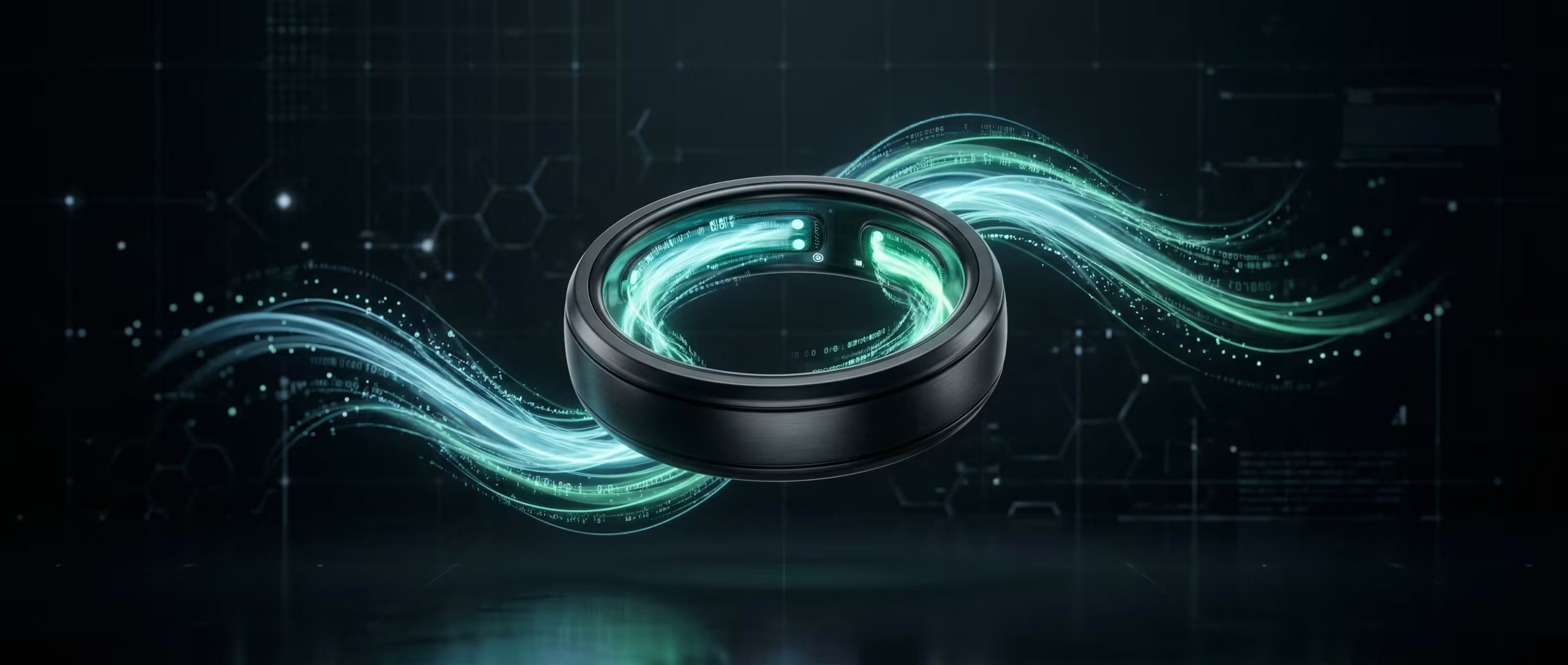
- Trend Tracking vs. Diagnostics: Smart rings are not medical devices meant to provide absolute diagnostic values. Their true power lies in continuous, long-term trend tracking, helping users understand variations from their personal health baselines.
- The Anatomical Advantage: Fingers possess a higher density of blood vessels, allowing advanced PPG sensors to capture highly stable biometric signals compared to the wrist.
- Interactive Engineering: Leading manufacturers are moving beyond passive tracking. The integration of haptic vibration, touch controls, and SOS triggers perfectly matches modern consumer needs, creating significant product differentiation.
For retailers and B2B buyers, understanding the technical boundaries and capabilities of smart rings is crucial. Consumers today are highly educated; they expect advanced wellness insights but also demand practical daily utility. Let's deconstruct the engineering inside a premium COMI Smart Ring, exploring how we balance health trend tracking with cutting-edge interactive features.
Table of Contents
A common misconception in the wearable market is treating smart rings as substitutes for medical equipment. It is imperative to clarify: Smart rings are not medical devices. Because non-medical wearables use entirely different monitoring principles (optical sensors vs. invasive or clinical-grade diagnostic tools), they cannot—and are not intended to—provide 100% absolute values for diagnosing illnesses.
The true value of a smart ring lies in longitudinal health trend tracking. For a health-conscious user, the exact, absolute numerical value of a single heart rate reading is less important than understanding their personal baseline. A smart ring continuously monitors variations—such as a sudden drop in Heart Rate Variability (HRV) or a spike in skin temperature—providing the user with a horizontal comparison of their wellness over time. This empowers users to make proactive lifestyle adjustments based on meaningful trends rather than isolated medical data points.
If smart rings focus on trends, why are they preferred over smartwatches for sleep and recovery tracking? The answer lies in basic human anatomy and signal quality.
Smartwatches capture blood flow from the top of the wrist—an area characterized by thick skin, low capillary density, and constant muscular movement (motion artifacts). Conversely, the skin on the inside of the finger is thinner, and the arteries are closer to the surface. Furthermore, the snug, 360-degree fit of a properly sized smart ring prevents ambient light from leaking into the sensors. This physical seal provides a phenomenally clean "signal-to-noise ratio" (SNR), forming the foundation for highly consistent trend data.
The heart of a COMI smart ring is the Photoplethysmography (PPG) array. Cheap rings often use a single green LED. While sufficient for counting steps, it is inadequate for deep wellness tracking. Premium OEM smart rings utilize a sophisticated multi-wavelength architecture to build accurate user baselines:
While accurate wellness tracking is the foundation, what truly drives consumer adoption and daily engagement are interactive features. The engineering challenge is monumental: how do you fit mechanical and capacitive components into a 2.5mm thick ring shell?
COMI has solved this by moving beyond passive tracking, engineering smart rings that perfectly match active user needs through advanced miniaturization:
- Haptic Vibration Motors: We integrate ultra-micro vibration motors that provide silent wake-up alarms, discreet medication reminders, and notification alerts, allowing users to stay connected without looking at a screen.
- Capacitive Touch Controls: By engineering touch-sensitive outer surfaces, users can swipe or tap the ring to control music playback, turn pages on an e-reader, or remotely trigger their smartphone camera—adding massive daily utility.
- SOS Emergency Triggers: Personal safety is a rapidly growing market demand. Our rings can be configured to trigger an SOS alert (sending location data to emergency contacts via the companion app) with a specific sequence of taps, providing peace of mind in critical situations.
Want to Experience Our Interactive Tech?
Request a developer sample to test our micro-vibration, touch controls, and robust trend-tracking algorithms firsthand.
As a B2B buyer or retail brand, partnering with an OEM manufacturer that understands both data integrity and consumer utility is non-negotiable. Promoting a smart ring as a "medical device" creates severe legal and customer satisfaction risks.
Instead, by choosing a manufacturing partner like COMI—equipped with advanced trend-tracking algorithms and highly differentiated interactive features (Touch, SOS, Vibration)—you deliver a product that perfectly aligns with realistic consumer expectations and significantly outperforms generic competitors.
Build Your Wearable Brand on Solid Engineering
Partner with COMI to leverage our advanced sensor arrays and interactive hardware. We offer scalable OEM/ODM manufacturing for brands that demand honest data and superior functionality.