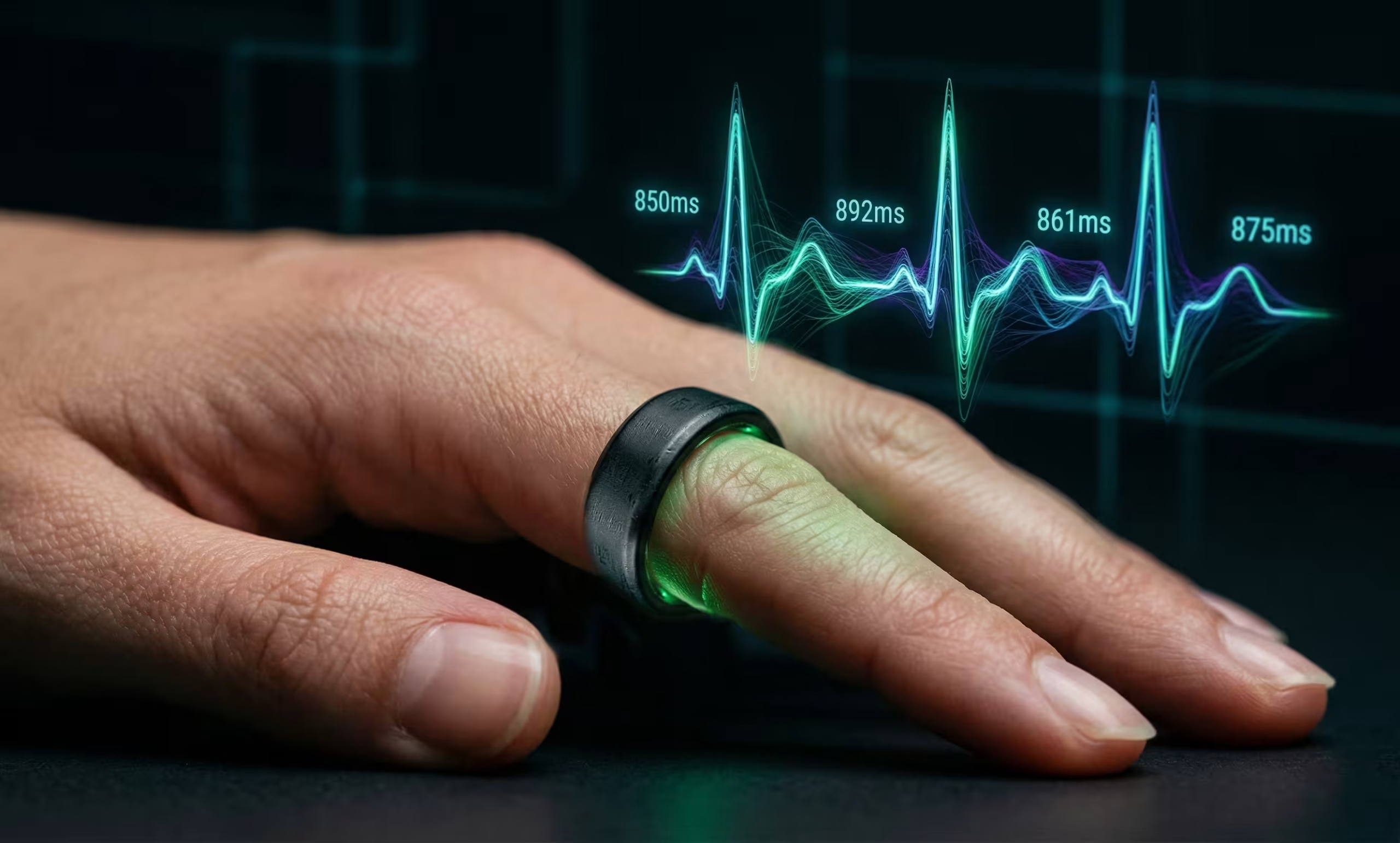
If you want to understand how your body handles stress, tracking your heart rate is no longer enough. The future of physiological monitoring lies in the spaces *between* the beats. Heart Rate Variability (HRV) has emerged as the gold standard metric for athletes, biohackers, and health-conscious individuals to gauge true daily recovery. Let’s decode the data.
Inside This Guide
Despite what a ticking clock might suggest, a healthy heart does not beat with perfect, metronomic regularity. Heart Rate Variability (HRV) is the measurement of the specific fluctuations in time intervals between consecutive heartbeats, measured in milliseconds (ms).
These tiny variations are perfectly normal. In fact, a higher variation is highly desirable. It proves that your cardiovascular system is actively receiving and responding to dynamic signals from your nervous system.
To understand HRV, we must look at the control center: the Autonomic Nervous System (ANS). The ANS manages your body's unconscious functions (breathing, digestion, heart rate) and is divided into two competing branches:
"HRV is not just a heart metric; it is a non-invasive window directly into your nervous system's capacity to balance stress and recovery."
- Sympathetic Nervous System (Fight or Flight): This branch reacts to stress (exercise, work deadlines, poor sleep). It tells your heart to beat faster and with less variation, keeping you highly alert.
- Parasympathetic Nervous System (Rest and Digest): This branch promotes recovery, digestion, and sleep. It slows down your heart rate and allows room for variability between beats.
When both branches are balanced—meaning your body can quickly switch between being alert and being relaxed—your HRV is high.
HRV is a highly individualized metric. You should never compare your raw HRV number to someone else's; instead, compare it to your own historical baseline.
Indicates a strong Parasympathetic response. Your body is well-rested, fully recovered from previous physical or mental strain, and primed to take on high-intensity workouts or demanding cognitive tasks.
Indicates Sympathetic dominance. Your body is under stress. This can be caused by overtraining, alcohol consumption, poor sleep, dehydration, or an impending illness. It's a signal to prioritize rest.
Because HRV measures changes in milliseconds, it requires incredibly clean data. Wrist-based smartwatches often struggle with motion artifacts, thick skin, and loose fits, which introduce "noise" into the data.
Smart rings hold a distinct anatomical advantage. The skin on the palmar side of the finger is thin and densely populated with capillaries. Combined with the snug 360-degree fit of a ring, the infrared PPG sensors can capture high-fidelity, beat-to-beat variations during the night without light leakage or motion disruption. This results in clinical-grade trend tracking that you can trust when making daily lifestyle decisions.
Upgrade Your Wearable's Algorithmic Power
Accurate HRV tracking is the cornerstone of modern wellness devices. Partner with COMI for OEM/ODM smart ring manufacturing that leverages advanced PPG sensor arrays and proprietary noise-filtering algorithms.